



RUBENS RAFAEL

Rubens Rafael

Full stack software engineer

I build web products end to end, from interfaces and APIs to integrations, infrastructure, and AI features. At GitStart, I work on products for different clients.

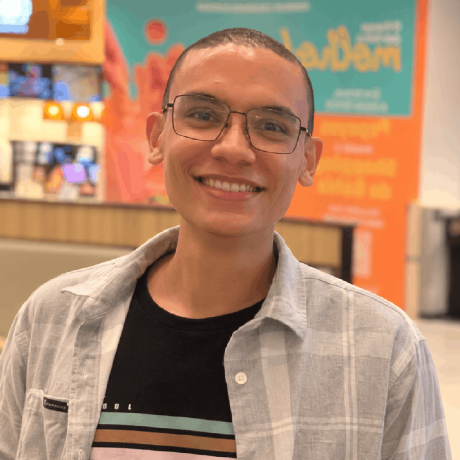
Portrait of Rubens Rafael

Education & credentials

Academic background and certifications

Postgraduate Degree, Computer Software EngineeringEstácio · 2025
Associate Degree (CST), Systems Analysis and DevelopmentEstácio · 2022–2024
Certifications6
Análise e desenvolvimento de sistemasEstácio · Jan 2025
Spread Full Stack DeveloperDigital Innovation One Inc. · May 2022
Programa de Treinamento Hiring Coders
HTML Web DeveloperDigital Innovation One Inc. · Jun 2021
Inter Front End DeveloperDigital Innovation One Inc. · Feb 2022
Software EngineerEstácio
GitStart & FreelanceSoftware Engineer · 2022–present

On-demand engineering at GitStart for external clients, internal projects, and open source, plus freelance web projects for clients.

Own ProductsIdeation & development · 2026–present

Products built outside GitStart with teammates for the Brazilian market: MoneyFy and Licify. The work spans data modeling, external integrations, user experience, and implementation.

Personal ProjectsIdeation & development · 2025–2026

Projects built solo from idea through end-to-end execution. Calamo and Floggy span data modeling and SDK work through production infrastructure, queues, billing, and self-managed deployment.

Projects

Click the center card to open it and read the story behind the project.

2026
CONSUMER FINTECH

MoneyFy

Built MoneyFy from scratch, a personal finance app with WhatsApp as the interface: backend architecture, data modeling, and the AI agent that interprets user messages.

NestJSNext.jsTypeScriptPostgreSQLRedis OpenAI WhatsAppMercado PagoDigitalOcean
CONSUMER FINTECH

MoneyFy

An agent pipeline decides the action from the user's message — text, audio, or a receipt. Hotmart and Mercado Pago as payment integrations, handling onboarding and subscriptions.

Challenge: Keeping the agent accurate on a small, cheap model (GPT-5 nano) instead of a larger one, tuning reasoning per call type to control cost without losing reliability.

2025–2026
AI AGENT TOOLING

Calamo

Solo build of Calamo, a no-code backend builder: define objects and actions visually and publish them as REST routes or MCP tools, ready for an AI agent to call.

NestJSNext.jsTypeScriptPostgreSQLPrismaMongoDBRedisModel Context Protocol OpenAI StripeDigitalOcean
AI AGENT TOOLING

Calamo

NestJS and Next.js monorepo, with Postgres via Prisma/Knex for user-defined data, Mongo for execution logs, a Redis/BullMQ queue, Stripe billing, and a built-in AI chat (OpenAI Agents SDK) that helps build objects and actions in natural language.

Challenge: Keeping REST and MCP coming out of one action engine, with a full CRUD per object in both formats and no duplicated logic, while letting users reshape their data without breaking the actions.

2024
COMPLIANCE SAAS

Drata (Project Cosmos)

Worked on Project Cosmos, building a robust unit and integration test suite for the client's internal UI component library.

ReactTesting LibraryJestTypeScript
COMPLIANCE SAAS

Drata (Project Cosmos)

The suite ensures full coverage for design-system components — both functional behavior and strict accessibility (a11y) conformance.

Challenge: Guaranteeing the integrity, resilience, and accessibility conformance of the company's global components before downstream consumption, by simulating complex interface interactions.

2023–2024
OPEN SOURCE → CLIENT

Cal.com

Started as an open-source contribution that, thanks to the quality and impact of the team's results, turned into a formal direct client contract.

Next.jsReactTailwind CSS TypeScript
OPEN SOURCE → CLIENT

Cal.com

The work covered visual refactors and general UI/UX improvements across the platform, plus e2e test coverage.

Challenge: Adapting and improving the UI in a large-scale, high-visibility open-source repository, while holding rigorous code standards and compatibility with the Next.js architecture.

Working on Chromium was pretty unexpected. I had zero experience in C++ and Java, but they trusted that I would still deliver good work.

One of the skills I have kept working on throughout my career is reviewing code with the whole system in mind, understanding how a change affects everything else, not just whether the implementation I am reviewing makes sense on its own, but how it fits into a much larger scope.

That skill was what made it possible for me to deliver good work using AI on Chromium. I managed to turn using AI into real learning, instead of vibecoding, staying responsible for everything I submitted even with no experience in that stack, and that is what proved I could hold a serious standard of work even well outside my comfort zone.